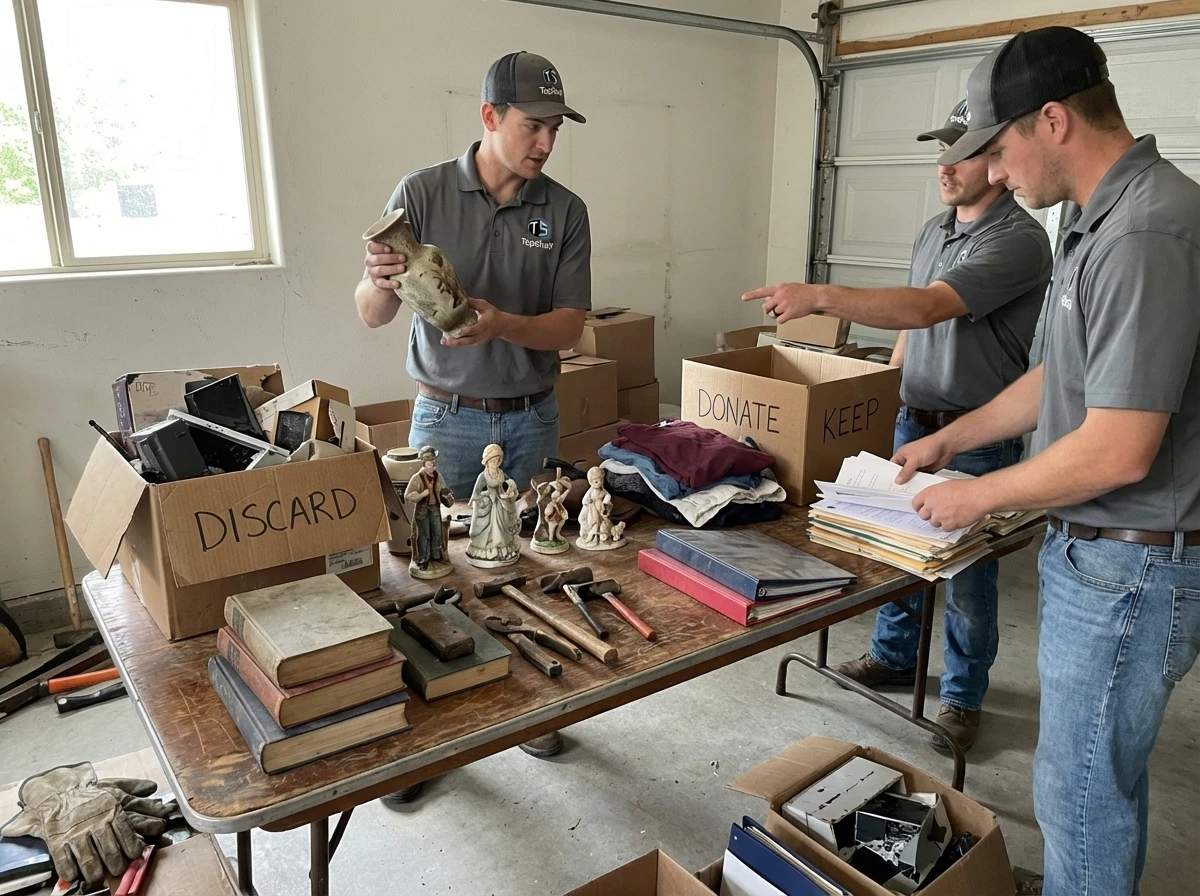
What to Keep, Donate, and Toss
During an estate cleanout, you'll make hundreds of decisions about what to keep, donate, sell, or throw away. Without a framework, decision fatigue sets in fast.
Here's a practical approach to sorting that helps Boise families work through belongings efficiently while minimizing regret.
A Simple Decision Framework
For each item, ask yourself:
Will I (or someone specific) actually use this? Not "could someone use this" but "will I or a specific person I have in mind actually use this item in the next year?"
Does this hold genuine sentimental value? Not everything that belonged to the person is equally meaningful. A few carefully chosen items carry more emotional weight than boxes of stuff.
Is this worth the space it takes? Storage isn't free. Every item you keep needs a place to live. Is this item worth that space in your home?
If the answer is no to all three, let it go. If you're uncertain, move to the next questions.
What to Almost Always Keep
These items are worth keeping regardless of practical use:
Good Candidates for Donation
These items help others and clear space efficiently:
Clothing in good condition. Most families have far more clothes than anyone can use. Donate to Goodwill, Salvation Army, or local shelters.
Kitchen items. Dishes, cookware, small appliances. Most people already have what they need, but new households forming can use these.
Books. Unless there's a specific collector's item, most books can go to library sales, used bookstores, or Little Free Libraries.
Furniture in decent shape. Habitat for Humanity ReStore, St. Vincent de Paul, and other organizations accept usable furniture.
Tools and hobby supplies. Someone starting out can use these. Check with local schools, makerspaces, or community organizations.
What's Actually Worth Selling
Be realistic about resale value. Most household items are worth less than people think. Items that may be worth selling:
Antiques and collectibles. If it's genuinely antique (not just old) or part of a collected series, it may have value. Get an appraisal for significant items.
Quality furniture. Solid wood pieces from known makers can sell. Particle board furniture isn't worth the effort.
Tools in good condition. Power tools, hand tools in working order have resale value on Facebook Marketplace or Craigslist.
Jewelry and precious metals. May need professional appraisal. Gold and silver have value even if pieces aren't fashionable.
Vehicles, equipment, firearms. These typically have clear market values. Firearms require proper transfer through licensed dealers.
What to Let Go Of
These items can go without guilt:
Duplicates. Nobody needs twelve spatulas or four coffee makers. Keep one if useful, let the rest go.
Worn-out items. Stained clothing, broken furniture, non-working appliances. If you wouldn't give it to a friend, it shouldn't go to donation either.
Outdated technology. Old TVs, computers, printers. These have minimal value and often cost to dispose of properly.
Magazines and newspapers. Unless there's a specific historic issue, these can go. Someone might want the recipes—they're all online now.
Items kept "just in case." If it's been in a box for ten years waiting to be useful, it's not going to be.
The Photo Alternative
For items with sentimental value but no practical use, consider this:
Take a photo. The memory doesn't require the physical object. A photo of grandma's chair preserves the memory without needing to store the chair.
Create a memory book. Photograph meaningful items before letting them go. You can flip through the book whenever you want.
Keep one representative item. You don't need the whole collection. One teacup from the set, one tool from the workshop, one book from the shelf can represent the whole.
The Bottom Line
You're not dishonoring someone by not keeping everything they owned. The person was more than their stuff. Keeping a few meaningful items honors them; keeping everything they ever owned creates a burden.
When in doubt, ask: Would they want me to carry this burden? Usually, the answer is no. They'd want you to keep what matters and let the rest help someone else or simply go.
Give yourself permission to make decisions without guilt. You're doing hard work that needs to be done.
Need Help With the Physical Removal?
Once you've made the hard decisions, we can handle removing everything that's leaving. Serving Boise, Meridian, Nampa, and the Treasure Valley.
Call (208) 314-4463