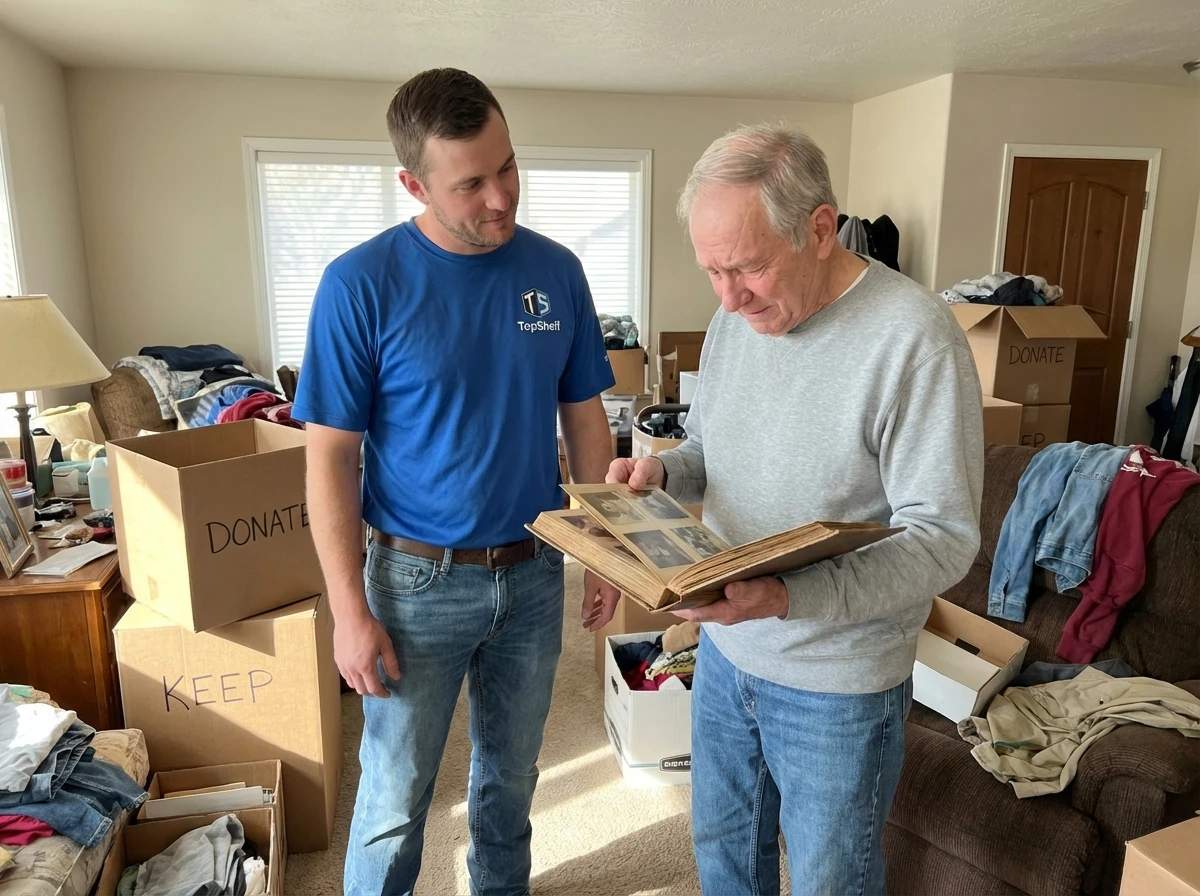
The Emotional Side of Estate Cleanouts
An estate cleanout isn't like cleaning out a garage. You're not just dealing with stuff—you're dealing with someone's entire life, their memories, and often your grief.
We've helped hundreds of Boise families through this process. The physical work is straightforward. The emotional weight is the hard part.
Here's what we've learned about coping with the emotional side of estate cleanouts.
It's Normal to Feel Overwhelmed
Estate cleanouts often happen during difficult times—after losing a parent, helping an aging relative transition to care, or settling affairs after an unexpected death.
Grief doesn't follow a schedule. You might be fine one moment and hit with a wave of emotion when you find something unexpected. That's completely normal.
The volume is overwhelming. A lifetime of possessions is a lot. Even if you've been in the home many times, seeing everything that needs to be sorted is different.
Decision fatigue is real. After making hundreds of keep/donate/discard decisions, your brain gets tired. It's not weakness—it's how humans work.
Give Yourself Permission
Some things that help people get through:
Permission to take breaks. You don't have to power through. If you need to stop and come back tomorrow, do that. If you need to cry in the middle of sorting, that's okay too.
Permission to keep things. Not everything has to be practical. Keeping your grandmother's tea set that you'll never use but can't bear to part with is valid.
Permission to let things go. You're not dishonoring someone by not keeping every item they owned. They would want their belongings to help you, not burden you.
Permission to ask for help. You don't have to do this alone. That might mean family members, friends, or professional help.
Strategies That Help Families Cope
From what we've observed helping Boise families:
When Family Is Involved
Estate cleanouts can bring up family tensions. Different people handle grief differently, and different people have different attachments to items.
Communicate early about meaningful items. Before the cleanout, talk about what matters to each person. It's easier to plan than to fight over something in the moment.
Respect different timelines. Some people need to move quickly. Others need more time. Try to find middle ground.
Consider a neutral party. Sometimes having someone outside the family coordinate decisions reduces conflict. That could be a professional organizer or a cleanout service.
Remember the goal. The goal is to handle the estate in a way that honors the person who's gone and works for everyone living. Keep that in focus when disagreements arise.
When Hiring Help Makes Sense Emotionally
Sometimes bringing in professionals isn't about the physical work—it's about the emotional weight:
Physical distance makes it harder. If you live outside the Treasure Valley and have limited time, doing an estate cleanout during a short visit is intensely stressful. Help lets you focus on what matters most.
Trauma in the home. If the death was unexpected or traumatic, being in the space can be difficult. Having others handle most of the work can be necessary for mental health.
Strained family relationships. If family members can't work together productively, a neutral service can complete the work without the conflict.
Simple emotional exhaustion. Sometimes you've just run out of capacity. There's no shame in that.
The Bottom Line
Estate cleanouts are hard in ways that have nothing to do with the physical work. Acknowledging that doesn't make it easier, but it does make it more manageable.
Take the time you need. Ask for help when you need it. And remember that getting through this—however you do it—is an act of love and service to someone who mattered.
If you need help with the physical side while you focus on the emotional side, we're here. We've been through this with many Boise families and understand what you're going through.
Need Help With an Estate Cleanout?
We handle estate cleanouts throughout Boise, Meridian, Nampa, and the Treasure Valley with care and respect. Call for a free consultation.
Call (208) 314-4463